How Camera Drones and Programmable Gimbals are Leveling the Playing Field
By ERMW Team
Thursday, April 30, 2026
The Honda Civic vs. The Helicopter
Let’s be real for a second. Think back to the opening sequence of Stanley Kubrick’s The Shining. The camera glides ominously over a glass-smooth glacial lake, effortlessly tracking a solitary yellow Volkswagen Beetle as it winds up a remote mountain highway. It’s majestic. It’s cinematic. And in 1980, getting that shot required a massive budget, a chartered helicopter, specialized anti-vibration mounts, and a highly coordinated flight crew.
Today? You can capture that exact same, buttery-smooth shot with a two-person indie crew operating out of the back of a beat-up Honda Civic.
For over a century, the cinematic playing field was wildly uneven. High-end production value—those sweeping, dynamic camera movements that tell your brain “this is a real movie”—was heavily gatekept by cash. If you wanted epic scale, you paid for it.
But that era is officially over. Relatively accessible robotics—specifically prosumer camera drones and programmable gimbals—have totally democratized visual storytelling. By stripping away the massive financial and logistical roadblocks of camera movement, these technologies are letting independent filmmakers and scrappy documentary crews capture elite, big-budget magic on a shoestring budget.
Why Hollywood Looked Like Hollywood
To truly appreciate the revolution, you have to look at the incredibly expensive legacy tools that used to define the "Hollywood look." Moving a camera smoothly used to be a logistical nightmare.
Helicopters & Mounts: Aerial cinematography was strictly VIP. You had to rent a chopper, hire a specialized pilot, and bolt on a gyroscopic mount like the Cineflex. A single day of aerial shooting could easily vaporize an entire indie film's budget.
Technocranes & Jibs: Want a sweeping shot that starts on the ground and floats into the air? You needed a massive crane. That meant finding flat ground, spending hours setting it up, hiring a small army to operate it, and paying eye-watering rental fees.
Dollies & Steadicams: Ground-level tracking meant either spending your morning laying and leveling hundreds of feet of heavy steel dolly track, or hiring a Steadicam operator. Traditional Steadicams use mechanical counterweights, requiring immense physical endurance and years of training. Those operators are basically athletes, and their day rates reflect it.
Because of this, indie films were usually stuck with a handheld, "gritty" aesthetic. Critics often praised it as an artistic choice, but ask any indie director from the 90s—mostly, it was just because they were broke.
The Drone Revolution: Owning the Sky
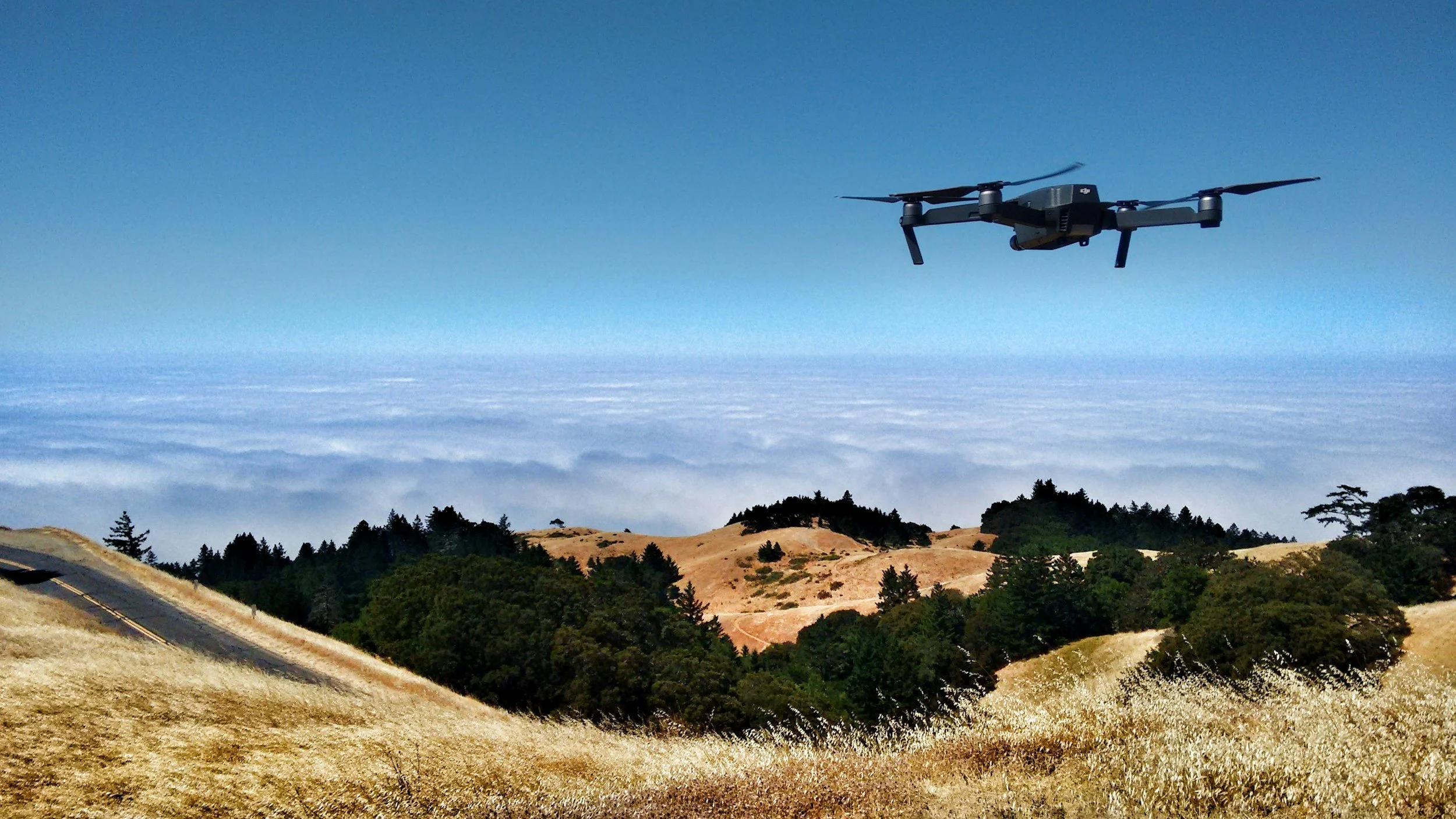
It’s wild how fast drones went from shaky, buzzing toys to legitimate cinema tools. It wasn't long ago that filmmakers were sweating bullets while duct-taping GoPros to the underbellies of plastic hobby drones. Today, cinematic beasts like the DJI Inspire 3 or the Mavic 3 Cine shoot in pristine, uncompressed raw formats with dynamic range that rivals massive cinema cameras.
This gave filmmakers the ultimate gift: logistical freedom. An indie director can spot a great angle, unpack a drone, and be in the air in two minutes. Compare that to the hours of airspace coordination and flight planning a helicopter requires. Plus, drones can go where choppers simply can't. They can fly through a living room window, weave through tree branches, or dive down tight alleyways.
For documentarians, it’s been a total game-changer. Nature and conflict crews can capture wild, extreme environments or track fast-moving subjects without disturbing the wildlife or drawing the massive, noisy attention of a low-flying helicopter.
Ground-Level Precision
While drones conquered the sky, motorized 3-axis gimbals completely revolutionized the ground. Gear like the DJI Ronin or the Freefly MoVI essentially ended the traditional Steadicam’s monopoly on smooth movement. By trading heavy mechanical counterweights for smart microprocessors and brushless motors, gimbals made stabilization available to everyone.
The biggest perk? The "run-and-gun" advantage. Gimbals are incredibly lightweight. You can sprint down a street alongside your actor, effortlessly pass the camera right through the window of a moving car to a buddy in the backseat, and keep the shot going without cutting. Try doing that with a 70-pound Steadicam rig.
This gave rise to the "micro-crew." One person holding a gimbal ring with an automated focusing system can now do the job of a dolly grip, a track layer, and a focus puller.
Your Robot Crew Member
But here is where things get really cool: modern gimbals and drones aren't just smooth; they're smart. This is where accessible tech crosses over into high-end motion control.
Because these tools are essentially flying or handheld robots, they offer highly repeatable moves. A director can program a precise A-to-B camera path, telling the gimbal exactly how fast to pan, tilt, and roll. This lets indie crews nail flawless visual effects plates, crazy motion time-lapses, or complex transition shots—stuff that used to require renting a $5,000-a-day robotic arm.
Then there’s the AI. Features like ActiveTrack use advanced algorithms to lock onto a subject and keep them dead-center in the frame. You don't have to be a master camera operator with lightning-fast reflexes anymore; the robot handles the framing, freeing you up to just focus on walking backward without tripping over a rock.
Case Studies in the Wild
You don't have to look far to see this tech in action. It’s completely blurring the line between studio tentpoles and scrappy indie projects.
The Sci-Fi Epic on a Budget: Look at Gareth Edwards’ jaw-dropping film, The Creator. It looks like a $200 million blockbuster, but Edwards shot a massive chunk of it using a prosumer Sony camera slapped onto a lightweight, consumer-grade DJI gimbal. His tiny crew bounced rapidly around real locations in Southeast Asia, getting a massive, epic look for a fraction of the usual cost.
The Adrenaline Doc: Documentaries have completely shed their static, boring, tripod-bound roots. Projects like the sweaty-palm-inducing Free Solo or Netflix's Formula 1: Drive to Survive lean hard into FPV (First Person View) drones and gimbals. Instead of watching rock climbers or race cars from a mile away, the audience is thrown right into the cockpit.
The Drawbacks, the Law, and the "Drone Cliché"
Of course, it isn't all sunshine and perfectly stabilized rainbows.
As the skies have filled up with flying cameras, the legal landscape has become a headache. Filmmakers have to navigate a maze of FAA regulations, get Part 107 commercial licenses, and fight with software that physically stops their drones from taking off if they are anywhere near restricted airspace.
Then there’s the artistic side: the "overuse" epidemic. It is an absolute running joke in the indie film world that every single low-budget movie now opens with a top-down drone shot of a car driving through a pine forest. When the tech is this easy to use, there's a very real danger of letting the shiny new toy dictate the story, rather than letting the story dictate the tool.
And let's not forget tech panic. A heavy steel dolly track rarely crashes or needs a software patch. A high-tech drone? You'll be dealing with firmware updates in the middle of the desert, compass calibrations that refuse to work, and the sheer terror of hearing the "low battery" beep while your drone is hovering over a lake.
The Story is King
Ultimately, the walls surrounding cinematic visual storytelling have been completely smashed down. The sweeping, fluid camera movements that used to scream "Hollywood Money" are now chilling in the backpacks of college students and indie filmmakers everywhere.
And it’s only going to get crazier. With AI-driven autonomous drones getting smarter and camera sensors getting smaller, the gap between a $500,000 Hollywood rig and a $5,000 indie kit is vanishing fast.
In the end, this is a massive win for storytelling. When you no longer need a mountain of cash just to make your movie look like a movie, imagination takes center stage. Big-budget cinematic language is now a universal dialect—and it's giving a louder, more beautiful voice to stories that otherwise might never have been told.