Green Sets: A Guide to Sustainable Production in 2026
By ERMW Team
Thursday, July 16, 2026
The era of the "strike and dump" Hollywood set—where millions of dollars of custom-built sets, costumes, and props were bulldozed straight into a landfill the moment the director called a final cut—is officially dead.
As we move through 2026, sustainable film and television production is no longer a fringe initiative pushed by a few eco-conscious producers; it is a baseline operational standard. Driven by tightening government regulations, cross-border standards like the newly implemented Nordic Ecological Standard (NES), and the formation of heavy-hitting coalitions like the Sustainable Entertainment Alliance, the industry is undergoing a massive infrastructural shift.
If you're stepping onto a set in 2026, here is your guide to how the magic of movies is being made without leaving a permanent scar on the planet.
1. The Zero-Waste Mindset and the Circular Economy
For decades, the standard practice was to build something spectacular, film it for a week, and throw it away. Today, the leading standard is a circular economy model aiming for a 90% or higher diversion rate from landfills.
Achieving a zero-waste set requires the art department to think about the end-of-life of a prop before it even gets drafted.
Modular Set Design: Instead of single-use wood and foam constructions, sets are increasingly built using modular, interlocking frameworks that can be disassembled and repurposed. Industry insiders are currently reporting that up to 70% of modular set materials are being successfully reused for future productions.
Digital Asset Tracking: High-budget productions have begun piloting blockchain technology to track props and wardrobe items. Every custom piece is logged, making it easier for different studios to rent, swap, or donate assets rather than building them from scratch.
The End of Single-Use Crafty: Craft services have been entirely overhauled. Strict bans on single-use plastics are standard, driven by state-level regulations like California's AB 1276. Reusable serveware, compostable packaging, and plant-forward menus sourced from local farms are now the norm.
2. Pulling the Plug on Diesel
If there was one sound that defined 20th-century filmmaking, it was the persistent, thrumming roar of the diesel generator. In 2026, the power grid of a film set looks and sounds entirely different. Energy consumption is the largest contributor to a production's carbon footprint, and the transition to clean power has been swift.
Battery Power & Hybrid Systems: Massive, silent lithium-ion battery packs and portable power stations are replacing traditional diesel generators. When basecamps require more power than batteries can supply, productions are utilizing hybrid systems or generators running on renewable diesel.
Grid Tie-Ins: Cities that frequently host film productions are upgrading their municipal infrastructure to include specialized clean-energy grid tie-ins. Instead of towing a generator to a city street, location managers can simply plug the production directly into the local renewable energy grid.
Ultra-Efficient Lighting: The days of hot, energy-hungry tungsten and HMI lights are mostly behind us. Modern sets rely almost exclusively on highly advanced, low-heat LED lighting fixtures that draw a fraction of the electricity without sacrificing color rendering or creative control.
3. The Virtual Location (LED Volumes)
Perhaps the biggest technological leap aiding sustainability in 2026 isn't a recycling program—it's the massive adoption of Virtual Production.
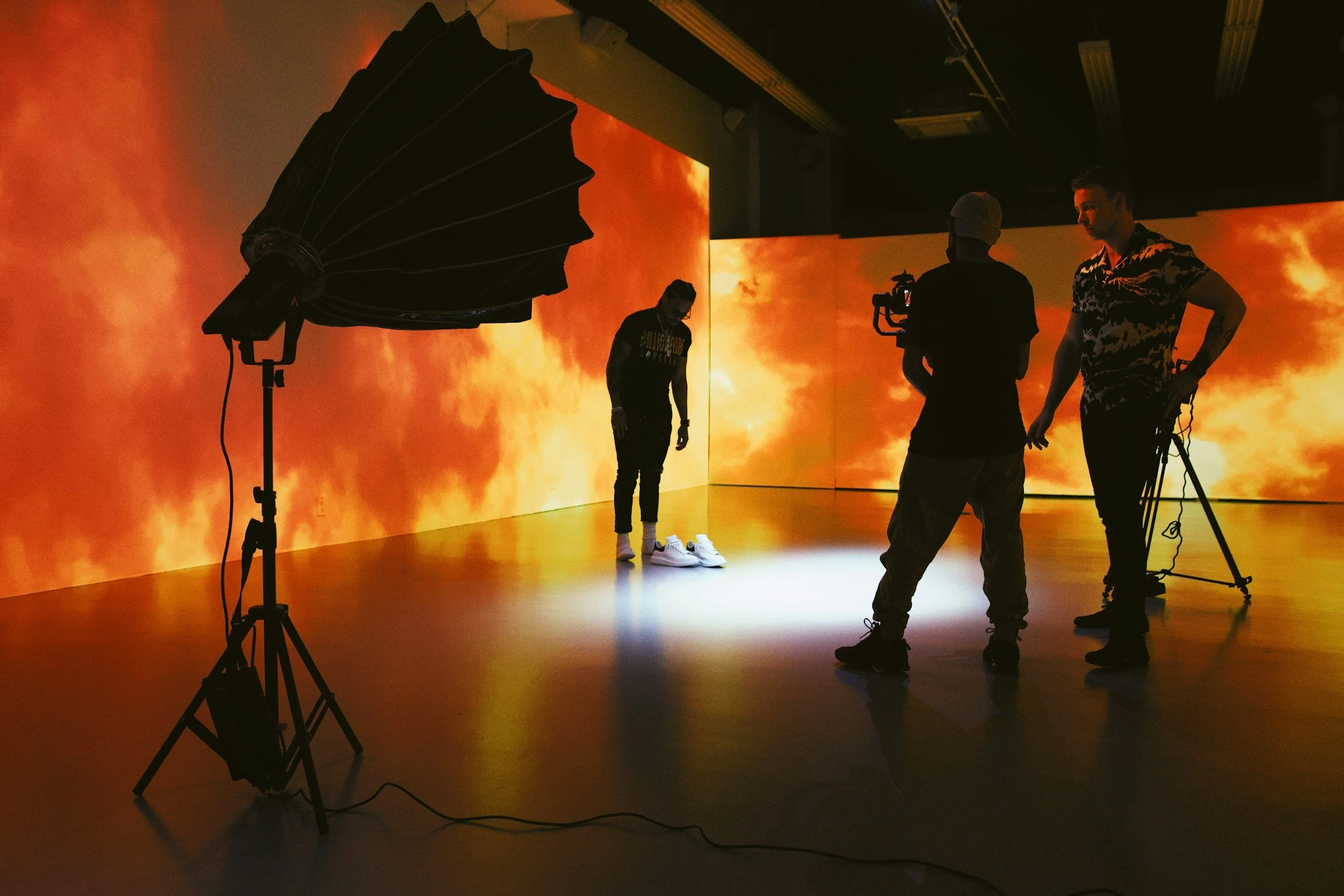
Instead of flying a cast and crew of 150 people to the mountains of New Zealand or the deserts of Jordan, productions are shooting on soundstages surrounded by massive, curved LED walls (called "Volumes").
By rendering photorealistic 3D environments in real-time, Virtual Production completely eliminates the massive carbon footprint associated with global air travel, location scouting, shipping tons of equipment, and housing crews in remote areas. It also protects fragile natural ecosystems from the physical trampling of a massive Hollywood production.
4. On-Screen Influence: Sustainable Storytelling
Sustainability in 2026 isn't just about what happens behind the camera; it's about what the audience sees on the screen.
Storytellers and sustainability teams are realizing that film and television have unparalleled power to normalize eco-friendly behaviors. Initiatives like Universal's GreenerLight Program (utilized on major releases like Wicked and Hamnet) are actively weaving environmental realities into mainstream media.
This doesn't necessarily mean every movie is a documentary about climate change. Instead, it involves subtle, deliberate "swaps":
Characters are shown driving EVs or taking public transit instead of gas-guzzling SUVs.
Protagonists bring reusable bags to the grocery store or drink from reusable water bottles.
Scripts naturally incorporate plant-based meals into dining scenes.
When a blockbuster aligns its on-screen narrative with its behind-the-scenes practices, it subtly shifts cultural norms, proving that sustainable living is simply a normal part of modern life.
The 2026 Green Production Setup
If you are stepping into a producing role or managing a set this year, implementing a green strategy is no longer optional. Here is the standard workflow to ensure your production meets 2026 compliance.
1.Hire a Dedicated Sustainability Supervisor:
Must happen during early Pre-Production.
Do not offload this onto a production assistant. Hire a certified professional who will run environmental impact assessments, calculate projected carbon emissions, and liaise with department heads to set waste diversion goals.
2.Mandate the Green Checklist for All Departments:
Before shooting begins, every department (Art, Wardrobe, Lighting, Catering) must submit their sustainability plan. This includes sourcing modular materials, prioritizing rented/vintage costumes, and committing to local food sourcing.
3.Secure Clean Energy Infrastructure:
Work with your location manager to map out grid tie-ins for city shoots. Book electric vehicle (EV) fleets for cast and crew transport, and reserve battery-powered generators well in advance, as demand is currently outstripping supply.
4.Implement Digital-Only Workflows:
Ban all physical paper on set. Call sheets, scripts, schedules, and storyboards must be distributed entirely via encrypted tablets and cloud-based production software.
5.Audit and Certify at Wrap:
Once filming concludes, your Sustainability Supervisor must complete a final carbon accounting report. Submit this data to recognized bodies (like the Green Film Rating System or the UK's Albert) to receive official green certification.