Painting & Scenic Work in Filmmaking
By ERMW Team
Thursday, June 3, 2026
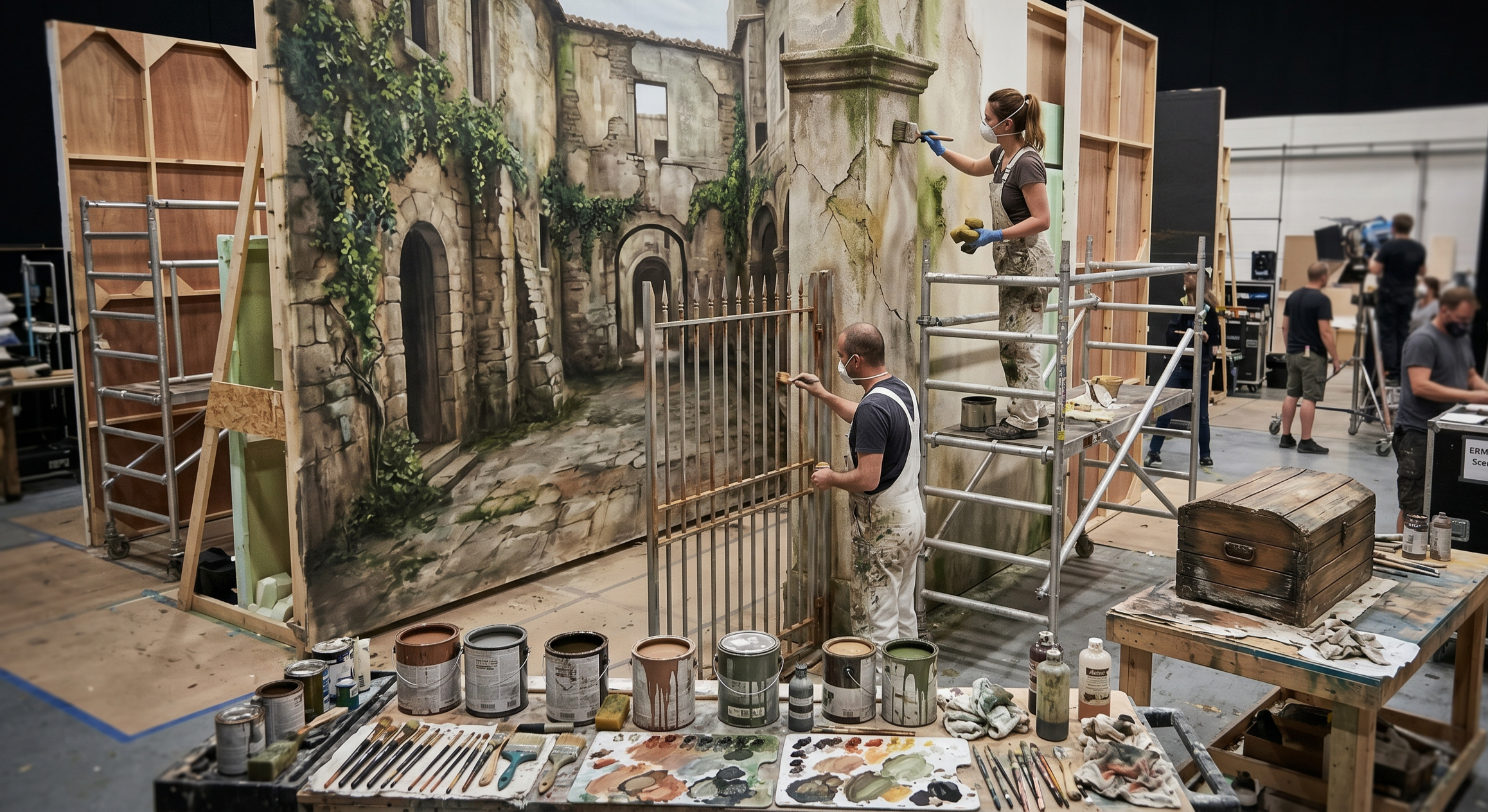
If metalworkers build the bones and greensmen provide the flesh, then Painters and Scenic Artists are responsible for the skin and soul of a film set. This craft is pure visual magic, transforming raw materials into believable textures and environments that deceive the camera and immerse the audience.
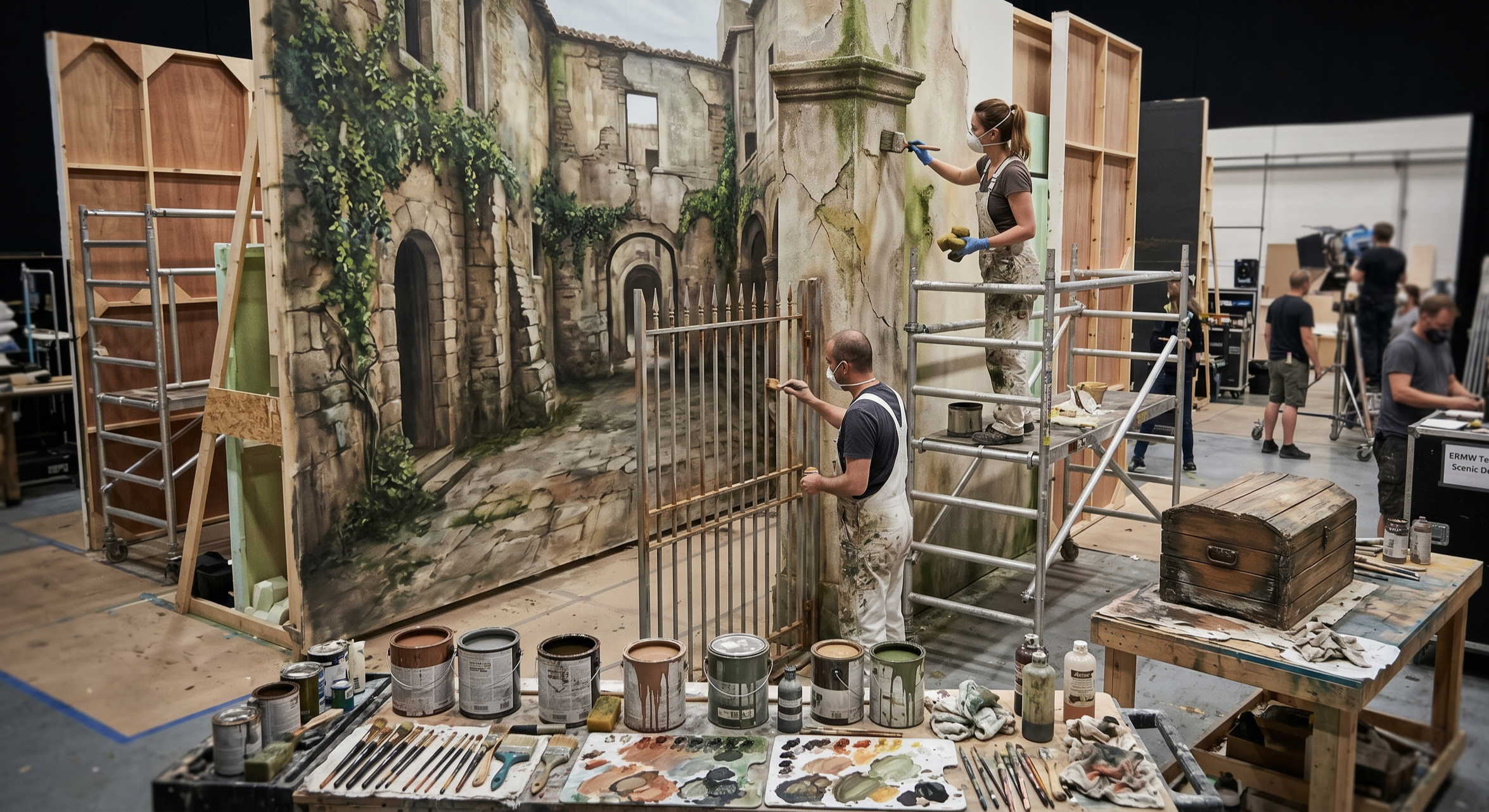
The Art of Deception: Where Scenic Work Appears
The scenic arts department uses specialized techniques to achieve the desired look and feel of a world, often hiding the budget-friendly materials underneath:
Aging / Distressing Props and Sets (Making New Things Look Old): This is one of the most critical jobs. A new wooden chest must look like it survived a century at sea; a pristine wall must look stained by time and weather. Scenic artists use techniques like sanding, scraping, staining, and dry-brushing to "age" or "distress" props and sets, adding layers of fictional history and realism.
Faux Finishes (Wood, Marble, Metal, Concrete): Why build a marble column when you can paint a foam one to look exactly like marble? Faux finishes are highly skilled applications of paint and plaster designed to imitate expensive, heavy, or difficult-to-source materials. This ability to simulate wood grain, rusted metal, polished stone, or cracked concrete saves immense time and money.
Scenic Backdrops and Murals: For scenes where a practical background isn't feasible, the scenic team creates massive, detailed backdrops or murals. These are often hand-painted on canvas or large flats and must be painted in forced perspective or extreme detail to look realistic under high-definition cameras.
From Canvas to Camera: Hobby Crossovers
The professionals who excel in scenic work often draw on a lifetime of artistic and technical hobbies:
Model Painting / Miniature Painting: These hobbies build exceptional control over small details, blending, shading, and the ability to work with various mediums to simulate different textures at a tiny scale—a skill highly transferable to prop finishing.
Mural Art / Street Art: Experience painting on large, non-traditional surfaces provides the ability to manage scale and utilize techniques for covering vast areas, directly preparing artists for large scenic backdrops.
Furniture Restoration: This provides practical experience with wood repair, staining, varnishing, and color matching, all of which are constantly required when aging sets and props.
Film Roles Related to Scenic Arts
This specialized craft is an integral part of the larger Art Department:
Scenic Artist / Painter: The primary role responsible for all large-scale painting, murals, backdrops, and faux finishes on the sets and standing construction.
Set Dresser: While not directly painting, the Set Dresser works closely with the scenic team to ensure the finished surfaces and textures support the smaller props and furniture they arrange.
Prop Finisher: Often a more specialized scenic artist, focusing on the smaller, more intricate painting and distressing required for hand props—making a plastic gun look like scratched steel, or a ceramic mug look chipped and dirty.
Scenic artists are the visual storytellers who give the film's environment character and history, ensuring that every frame viewers see contributes to the world's authenticity.