Top 10 Groundbreaking Indie Films of the 2020s That Prove You Don't Need a Hollywood Backlot
By ERMW Team
Thursday, May 21, 2026
As the summer blockbuster season ramps up—bringing with it explosions, CGI spectacles, and budgets that rival the GDP of small nations—it’s the perfect time to pivot and celebrate the sheer grit of modern independent filmmaking.
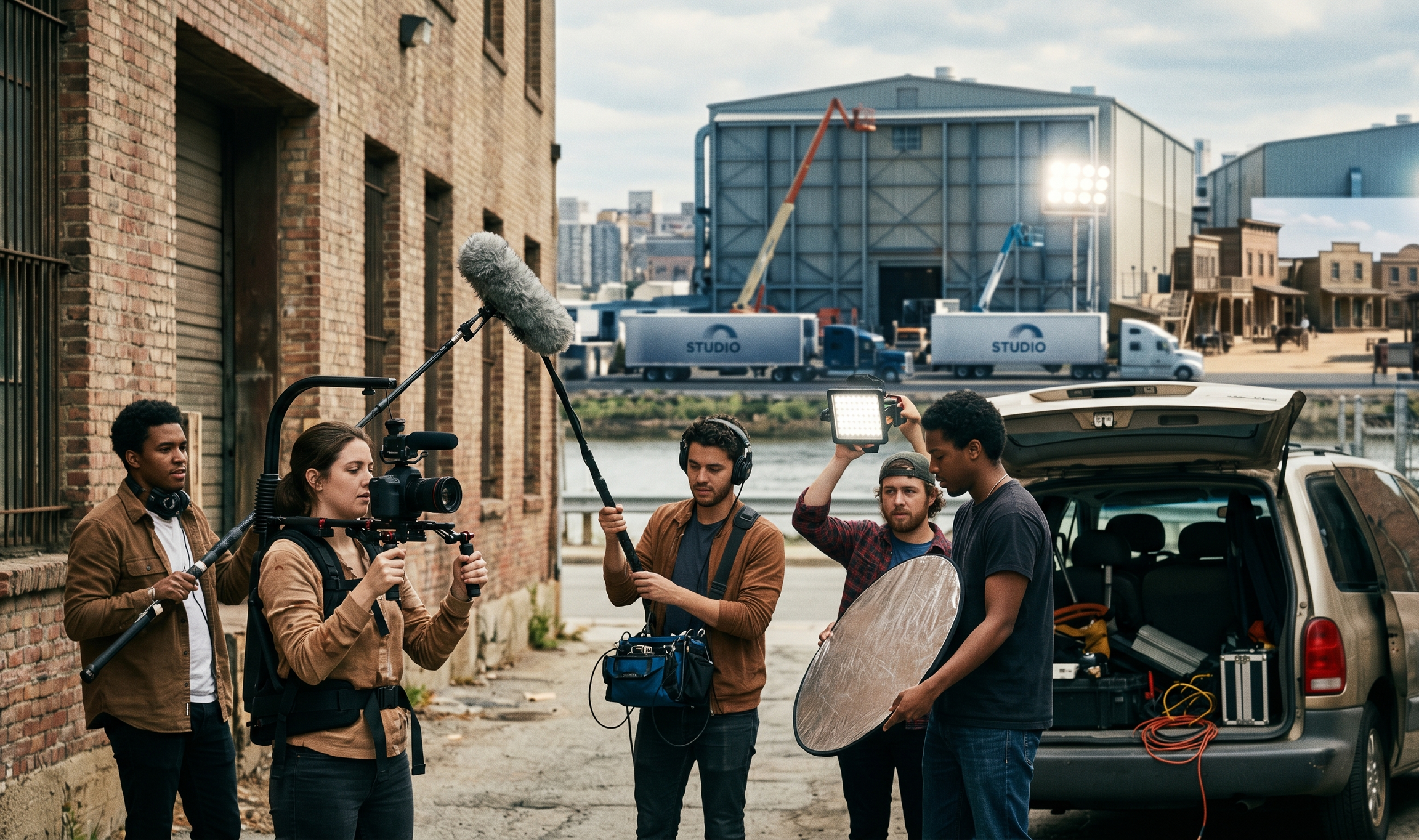
You might think the days of maxing out credit cards to shoot a movie ended in the 90s, but the 2020s have proven that scrappy problem-solving and practical locations still beat out massive soundstages when you have a vision. When you don't have a Hollywood backlot, the real world becomes your set.
Here is a quick look at 10 groundbreaking indie films released since 2021 that changed the game, followed by a deeper dive into how they pulled it off.
1. Skinamarink (2022)
Kyle Edward Ball turned the internet inside out with this viral, polarizing horror experiment. Made for roughly $15,000, the film was shot entirely in the director's childhood home in Edmonton, Alberta, using equipment borrowed from a local film co-op.
The Hustle: Ball didn't have money for complex lighting rigs or elaborate monster makeup. Instead, he filmed the mundane corners, ceilings, and hallways of his parents' house in near-darkness, relying on heavy digital grain and eerie audio design to turn a safe, familiar space into a liminal nightmare.
2. Hundreds of Beavers (2022)
This dialogue-free, black-and-white slapstick comedy became a massive cult hit on the festival circuit. Director Mike Cheslik and star Ryland Brickson Cole Tews shot the film for around $150,000, bringing Looney Tunes-style physical comedy to life without massive CGI set pieces.
The Hustle: The crew braved sub-freezing temperatures in the woods of Wisconsin and Michigan. Instead of animating the titular beavers, they bought full-body mascot suits and had their friends run around in the snow. The film's sprawling world was built through pure physical endurance, green-screen ingenuity, and practical stunts.
3. Rye Lane (2023)
Raine Allen-Miller’s vibrant, critically acclaimed rom-com injected fresh life into the genre by letting the setting be as loud and colorful as its characters. Rather than building a sanitized version of London on a soundstage, she shot on location in Peckham and Brixton.
The Hustle: Shooting a film through active, bustling markets with wide-angle lenses meant embracing the chaos. The production team utilized the natural, vibrant color palettes of local storefronts, arcades, and parks, giving the movie a kinetic, ground-level authenticity that you simply cannot fake on a backlot.
4. Late Night with the Devil (2023)
Australian filmmaking duo Colin and Cameron Cairnes crafted one of the tightest horror films of the decade by treating their movie like a live television broadcast. Set entirely on Halloween night in 1977, the film looks and feels exactly like a late-night talk show gone horribly wrong.
The Hustle: Instead of building multiple locations, the team pooled their indie budget into dressing a single soundstage in Melbourne to flawlessly replicate a 1970s TV studio. By using period-accurate broadcast cameras, practical lighting, and confining the action to the stage and the backstage green room, they turned a limitation into the movie's greatest strength.
5. Shiva Baby (2021)
Emma Seligman’s debut feature is a masterclass in claustrophobia. The comedy-thriller follows a young bisexual Jewish woman who runs into her sugar daddy at a family shiva.
The Hustle: Shot for around $200,000, the film takes place almost entirely inside a single, cramped house in New York. Seligman used the tight hallways, low ceilings, and crowded rooms to visually trap the protagonist. The location itself does the heavy lifting, turning a normal family gathering into a deeply anxiety-inducing experience.
6. Red Rocket (2021)
Sean Baker has always been a master of guerilla filmmaking (see Tangerine, shot on iPhones). For Red Rocket, he took a tiny crew down to Texas City, Texas, during the height of the 2020 pandemic lockdowns to shoot a darkly comedic character study about a washed-up porn star.
The Hustle: Baker filmed secretly and rapidly, utilizing the massive, looming oil refineries and real roadside donut shops of the Texas Gulf Coast. By casting local non-professionals alongside Simon Rex and shooting on 16mm film, Baker captured the textured, humid reality of the town without needing to dress a single set.
7. River (2023)
Junta Yamaguchi’s incredibly clever sci-fi comedy deals with a two-minute time loop. What makes it mind-boggling is that it was shot on location at the Fujiya Inn in Kibune, Japan—a real, operating historic inn situated over a freezing river.
The Hustle: Because the characters are trapped in a two-minute loop, the film is composed of consecutive two-minute long takes. The cast and micro-crew physically had to run up and down the inn's steep, snowy stairs in real-time, resetting their marks every two minutes while trying not to freeze or slip.
8. Dìdi (2024)
Sean Wang’s coming-of-age film about a 13-year-old Taiwanese-American boy navigating the summer of 2008 feels incredibly specific and lived-in. That's because it literally is.
The Hustle: Wang eschewed generic suburban shooting locations and instead returned to his actual hometown of Fremont, California. He filmed scenes in his own childhood home—specifically dressing his old bedroom to match the era—and utilized the local skateparks and streets he actually grew up in, bypassing the need for location scouts and expensive permits.
9. We're All Going to the World's Fair (2021)
Jane Schoenbrun’s chilling exploration of internet urban legends and teen isolation didn't need a sprawling budget. It needed a laptop and a bedroom.
The Hustle: The film relies heavily on webcam aesthetics, Skype calls, and YouTube video interfaces. By shooting in mundane upstate New York suburbs and framing the horror entirely through the glowing screens of real, dimly lit teenage bedrooms, Schoenbrun captured the hyper-specific feeling of being alone on the internet at 3 AM.
10. Strawberry Mansion (2021)
Albert Birney and Kentucker Audley co-directed this whimsical, surreal sci-fi film about a government auditor who must travel through people's dreams to tax them. It looks like a multi-million dollar fantasy world, but it was made on a shoestring budget.
The Hustle: Instead of relying on green screens and CGI, the filmmakers hand-built their dreamscapes out of cardboard, papier-mâché, and thrift store props inside a Maryland farmhouse. The practical, tactile nature of their costumes and stop-motion animation gives the film a handmade charm that no amount of Hollywood rendering could replicate.