

The Student’s Guide to Cybersecurity
By ERMW Team
Thursday, February 19, 2025
Between juggling assignments, managing a social life, and surviving on dining hall food, cybersecurity is probably the last thing on your mind. However, in 2026, the education sector has become one of the most heavily targeted industries by cybercriminals. Ransomware attacks on schools are surging, and student data is highly sought after on the dark web.
Here is everything you need to know about the current threat landscape and how to lock down your digital life without adding extra stress to your semester.
Why Cybercriminals Are Targeting You
You might be thinking, I’m a broke student—what could a hacker possibly want from me? Cybercriminals, however, view you as a high-value target for a few key reasons:
Clean Credit Histories: Young adults often have untouched or relatively clean credit reports, giving identity thieves a smooth path to open fraudulent accounts in your name.
A Gateway to the University: Hackers frequently compromise student accounts to bypass campus security, spread malware, or access sensitive research and financial databases.
Distraction and Urgency: Scammers thrive on distracted targets. Between exams and deadlines, a panicked student is much more likely to click a malicious link in an email claiming their "financial aid is about to be canceled."
Top Cybersecurity Threats on Campus in 2026
The days of poorly spelled scam emails from a "foreign prince" are largely over. Today’s threats are highly sophisticated, often weaponizing artificial intelligence to bypass your defenses.
1. AI-Powered Phishing and Social Engineering
Phishing remains the number one way hackers steal credentials, and generative AI has made these attacks incredibly convincing. Cybercriminals can easily scrape public university directories and use AI to draft flawless emails impersonating your professors, campus security, or the financial aid office.
2. Public Wi-Fi Vulnerabilities
Campus life means studying in coffee shops, libraries, and dorm lounges. While convenient, public Wi-Fi networks are notoriously unsecured. Hackers can easily intercept data sent over these networks, capturing your login credentials, bank details, or private messages.
3. Password Fatigue
With dozens of portals for homework, email, streaming, and banking, it is tempting to reuse the same password everywhere. If a hacker breaches just one of those services, they can use credential-stuffing software to break into all of your other accounts in seconds.
How to Protect Your Digital Life (Without Losing Your Mind)
You do not need to be a computer science major to keep your data safe. Adopting a few foundational habits—often referred to by security professionals as the "Core 4"—will block the vast majority of cyber threats.
The Golden Rule: Treat your Personally Identifiable Information (PII)—like your Social Security number, birthdate, and student ID—like cash. Be incredibly selective about who you share it with and where you type it.
Actionable Defense Strategies
Embrace a Password Manager: Stop trying to remember 16-character passwords. Use a reputable password manager to generate and securely store unique passwords for every single account.
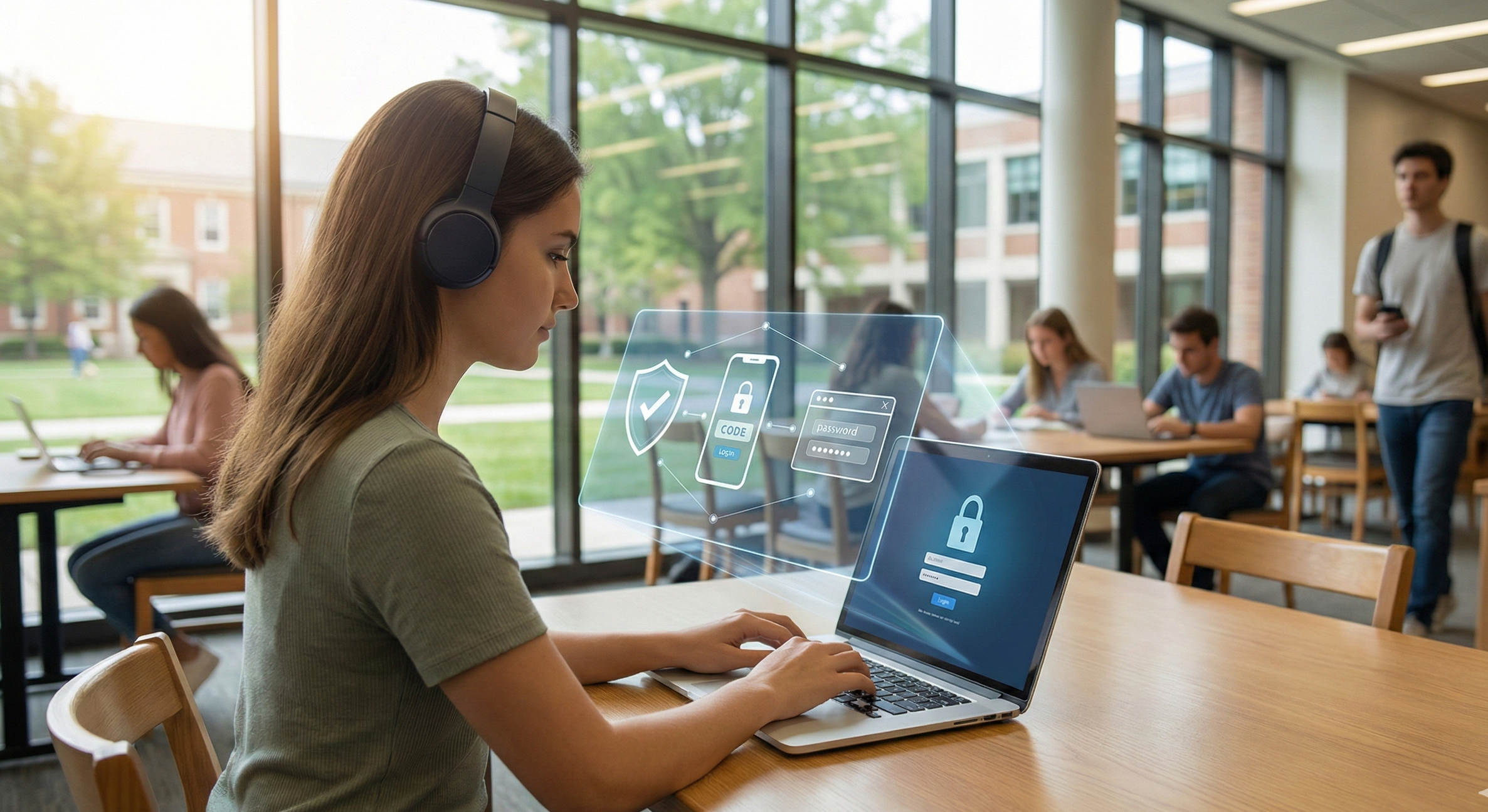
Enable Multi-Factor Authentication (MFA): Turn on MFA for your email, banking, and student portals. Even if a hacker steals your password, they cannot access your account without the secondary code sent to your phone or authentication app.
Update Everything, Always: Those annoying "software update available" pop-ups are usually patching critical security vulnerabilities. Set your phone, laptop, and apps to update automatically.
Use a VPN on Public Networks: If you must use public Wi-Fi to submit an assignment or check your bank balance, use a Virtual Private Network (VPN) to encrypt your internet traffic and hide it from prying eyes.
Back Up Your Coursework: Ransomware attacks or simple hardware failures can wipe out a semester's worth of work in an instant. Regularly back up your files to an external hard drive or an encrypted cloud storage service.
The Future: Deepfakes and Stricter Verification
As we move deeper into 2026, the intersection of AI and cybersecurity is actively reshaping higher education. Criminal groups are now using AI-generated identities and deepfake documents to create "ghost students" who enroll and steal financial aid. Because of this, you can expect universities and federal aid programs to roll out much stricter, multilayered identity verification requirements in the near future.
Staying vigilant and practicing good digital hygiene today will prepare you for the more rigid security environments of tomorrow's workforce.







May 1, 2025
Code, the language of computers, has become an invisible yet indispensable force shaping nearly every facet of our lives. From the moment we wake up to the ping of our alarm clock to the complex algorithms driving self-driving cars, code is the silent engine propelling our modern world forward. While often hidden from view, its impact is profound and constantly expanding.