The New Mexico Advantage: 2026’s Ultimate Production Hub
By ERMW Team
Thursday, October 15, 2026
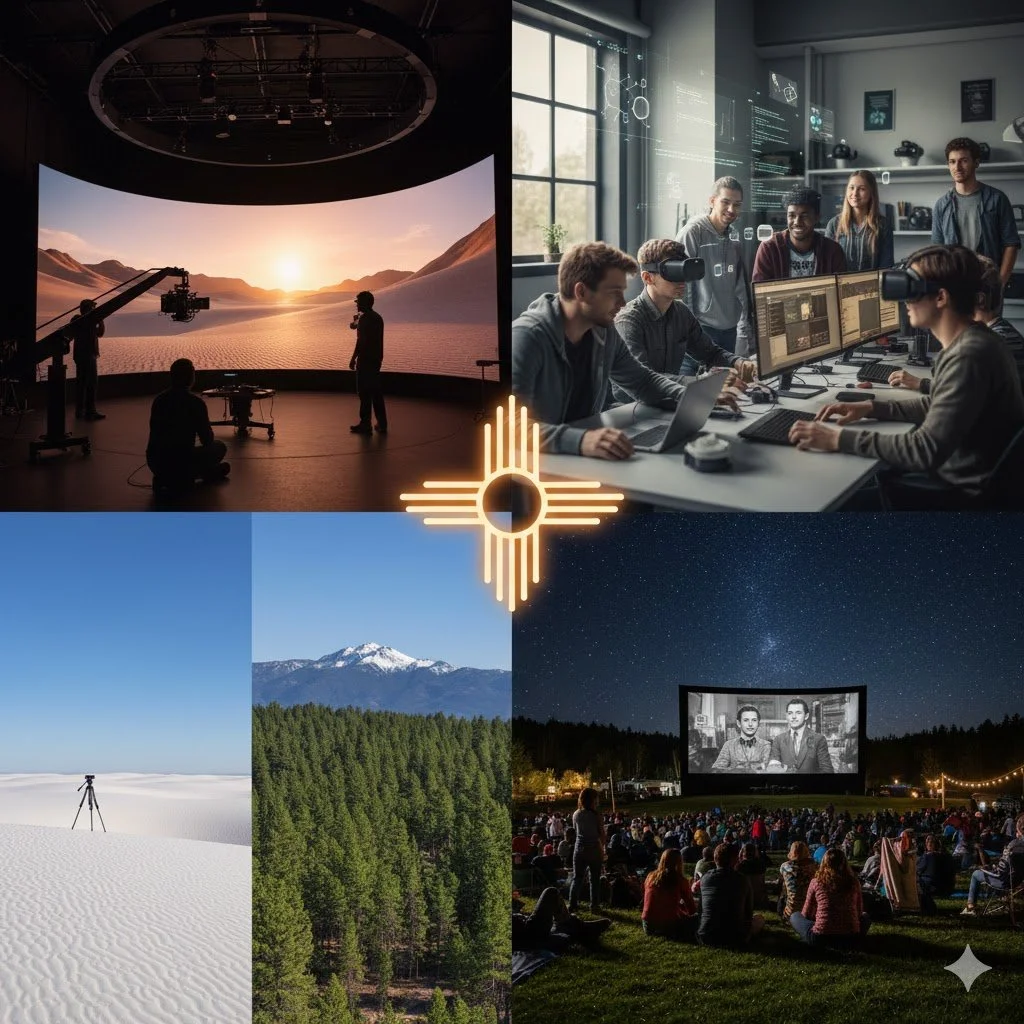
If there is a single, geographic "hack" to breaking into the film industry in 2026, it is relocating to New Mexico. While Los Angeles and New York remain legacy capitals, and Atlanta holds steady, New Mexico has aggressively engineered its tax infrastructure to become the most attractive production hub in the United States for both major studios and independent filmmakers.
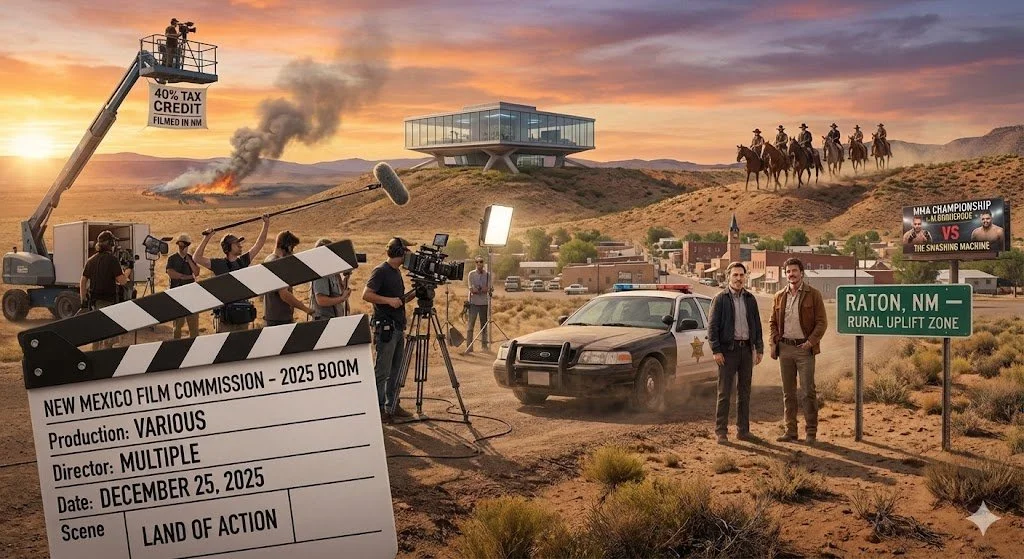
Understanding why New Mexico is booming requires looking at the financial mechanics that drive modern production. In fiscal year 2026, the state’s annual cap for its refundable film tax credit was raised to $140 million. The state offers a baseline 25% credit on qualified non-payroll spend and resident labor, but with strategic uplifts, productions can recoup up to 40% of their costs.
For an entry-level professional, this legislative framework translates directly into hiring demand in several critical ways:
The Zero Minimum Spend Anomaly: Unlike many states that require a massive budget to qualify for tax breaks, New Mexico has absolutely no minimum spend requirement. This means micro-budget independent films, pilot shoots, and creator-led digital projects are flocking to the state alongside massive Netflix and NBCUniversal blockbusters. For someone starting out, this creates a thriving middle-class of indie sets where Production Assistants (PAs) and junior camera operators can actually get hands-on experience, rather than just locking down streets on a massive studio lot.
The Rural Uplift Expanse: New Mexico offers a massive 10% uplift on the tax credit for productions that shoot at least 60 miles outside of Albuquerque and Santa Fe city halls. This has pushed production into areas like Las Cruces and remote desert towns. Establishing residency in or near these secondary hubs makes you an incredibly valuable local hire for location managers and line producers desperate to avoid paying travel and hotel costs for out-of-state crew to satisfy the rural uplift criteria.
The Local Crew Deficit: Because the volume of production in New Mexico is so high, there is a persistent shortage of below-the-line crew. IATSE Local 480, the union representing film technicians in the state, is continuously busy. If you establish legal residency in New Mexico (by completing a declaration of residency and obtaining a local ID), your resume immediately moves to the top of the pile for local coordinator and PA jobs.
The Non-Resident Exception: Even if you cannot move immediately, New Mexico offers a 15% credit to productions for utilizing up to 20 non-resident below-the-line crew members. While local residency is better, this exception allows skilled out-of-state junior technicians to still get hired without financially penalizing the production.
Moving to New Mexico and tapping into the local film office network, attending local union orientation days, and jumping onto indie sets in the Albuquerque-Santa Fe corridor is currently the highest-probability path to consistent, paid on-set work in North America.
Hard Skills Pay the Bills: The Power of Editing and AI Fluency
The era of the "generalist" entry-level worker who is simply "willing to work hard" is over. Productions run too lean and schedules move too fast to train people from zero. You need a hard, marketable skill that a producer desperately needs on a Tuesday at 6:00 AM.
The most bulletproof skill you can develop is video editing. Being proficient in standard non-linear editing software—specifically Avid Media Composer for high-end television, and Adobe Premiere Pro or Final Cut Pro for independent and digital spheres—guarantees you will never be out of work. Even if your ultimate goal is to write, direct, or work as a cinematographer, knowing how to edit makes you invaluable. It allows you to take on assistant editor (AE) roles, where you will sit in the room with veteran directors and showrunners, absorbing the reality of how stories are actually built.
Furthermore, 2026 requires fluency in the modern tech stack. You must move beyond traditional software and understand how to integrate AI-assisted tools into a production pipeline. The industry has moved past the initial panic of generative AI and settled into pragmatic integration.
You should be fluent in utilizing open-source AI tools to streamline workflows. For example, familiarity with AI-powered chroma-key tools like CorridorKey can drastically reduce the time needed for green-screen post-production. If you can walk into a production office and demonstrate how to automate their transcription process using advanced local LLMs, or how to use AI to generate rapid pre-visualization storyboards for a director’s pitch deck, you immediately elevate yourself from a replaceable PA to an essential creative technician.
Cultivating the Digital Sketchbook
You cannot break into the industry by simply sending a traditional PDF resume into a void. You must have a publicly accessible, easily shareable portfolio. In 2026, your online presence is your calling card, but it should not be treated as a static museum of perfect work; it should be treated as a dynamic digital sketchbook.
Platforms like Vimeo remain the industry standard for professional portfolios due to their high-quality compression and ad-free presentation, as well as a community reputation for constructive filmmaker support. YouTube, while heavily algorithm-driven, is essential for raw discoverability and understanding audience retention metrics.
Use these platforms to chart your progression. You do not need a massive budget to build a reel. Shoot lighting tests in your garage. Edit a montage of public domain archival footage to practice pacing. Shoot short, vertical videos with on-screen captions to prove you understand modern delivery formats. The goal is to show consistency, technical growth, and a distinct point of view. When a producer asks what you can do, you should be able to send them a cleanly organized Vimeo link within ten seconds.
Redefining Entry-Level Hustle
When people think of "breaking in," they often picture walking onto the set of a $100 million feature film. In reality, the most reliable entry points are found in the broader, rapidly expanding media ecosystem. You must widen your aperture regarding what constitutes a "film and television job."
Look for opportunities in live broadcast, sports media, and digital news. Entry-level roles like a Soccer Livestream Camera Operator or a broadcast production assistant require weekend availability but offer critical, trial-by-fire experience with remote cameras, live directing, and cable management. These environments teach you how to troubleshoot under immense, unyielding pressure—skills that translate flawlessly to a narrative film set.
Consider corporate media fellowships and digital publishing. Media companies constantly hire Video Producer Fellows to track newsroom issues and translate them into strong social video formats. These roles force you to learn rapid-turnaround editing, color grading, and narrative structure on a daily deadline.
If you are aiming for the traditional studio route, look for specific, targeted support roles rather than generic internships. Aim for positions like a Production Coordinator, where you will provide direct administrative support to a Line Producer. Target Unscripted Coordinator roles at specific production companies, or apply for Creative Assistant jobs where your daily tasks might involve editing short social videos and managing media kits.
When applying, do not say "I want to direct" or "I'll do anything". Everyone wants to direct. Be hyper-specific about the value you offer right now. State clearly: "I am a meticulous data wrangler," "I excel at organizing production logistics," or "I am a fast, reliable assistant editor."
Horizontal Networking and Finding Your Tribe
The old adage "it's not what you know, it's who you know" remains true, but the methodology of how you get to know them has changed. The mistake most newcomers make is vertical networking—spending all their energy trying to corner a famous director or a high-level studio executive at an event to hand them a script. This rarely works. Executives are insulated, busy, and inherently guarded against transactional interactions.
In 2026, the most effective strategy is horizontal networking. You need to network with your peers—the people who are currently at your level or just one step ahead.
Volunteer at Film Festivals: Film festivals across the country rely entirely on volunteer labor. By volunteering, you get a free pass to screenings, but more importantly, you spend 12-hour shifts working the badge-pickup table with other aspiring writers, directors, and producers. These are the people who will be crewing up their short films next month.
Leverage Digital Communities: Join highly specific regional Facebook groups, Discord servers, and Subreddits dedicated to local film production. If you move to New Mexico, join every Albuquerque and Santa Fe crew page available. Monitor them daily. When someone posts that their grip called in sick for a Saturday indie shoot, be the first person to comment that you have a pair of leather gloves and can be on set in twenty minutes.
Direct, Specific Outreach: It is entirely acceptable to reach out to working professionals online, provided you do so with extreme respect for their time. Do not ask for a job. Instead, identify a specific filmmaker, editor, or cinematographer whose recent work you genuinely admire. Send a concise message on Vimeo, Instagram, or LinkedIn. Praise a specific lighting setup or a particular transition they used, and ask a single, technical question about how they achieved it. If they respond, thank them and leave it at that. You are planting seeds, not harvesting them.
The Long Game
Surviving the entry-level phase in 2026 requires psychological stamina. You will likely take on a wide range of disparate work—a reality TV gig one week, a corporate livestream the next, and an unpaid passion project on the weekend. This is not a failure of focus; this is the reality of building a modern freelance career.
Do not be discouraged if you have to supplement your income by catering or washing dishes in the early days. The film industry does not offer a linear, corporate ladder. It is a lattice of independent contracts, personal recommendations, and sudden opportunities. Every reliable shift you work, every piece of software you master, and every peer you help load a truck at 2:00 AM builds your reputation. In an industry defined by constant technological shift and intense competition, being the person who is undeniably skilled, perpetually reliable, and pleasant to be around remains the most potent career strategy of all.