Lighting for TV 101: Mastering the Basics of Broadcast Illumination
By ERMW Team
Thursday, August 6, 2026
Whether you are lighting a documentary interview, a commercial spot, or a live broadcast, lighting is the single most critical element separating amateur footage from professional, broadcast-quality video. Cameras don't capture subjects; they capture the light reflecting off them.
Understanding how to manipulate that light gives you complete control over the mood, depth, and clarity of your scene. Here are the foundational principles of lighting for television and video production.
The Foundation: Three-Point Lighting
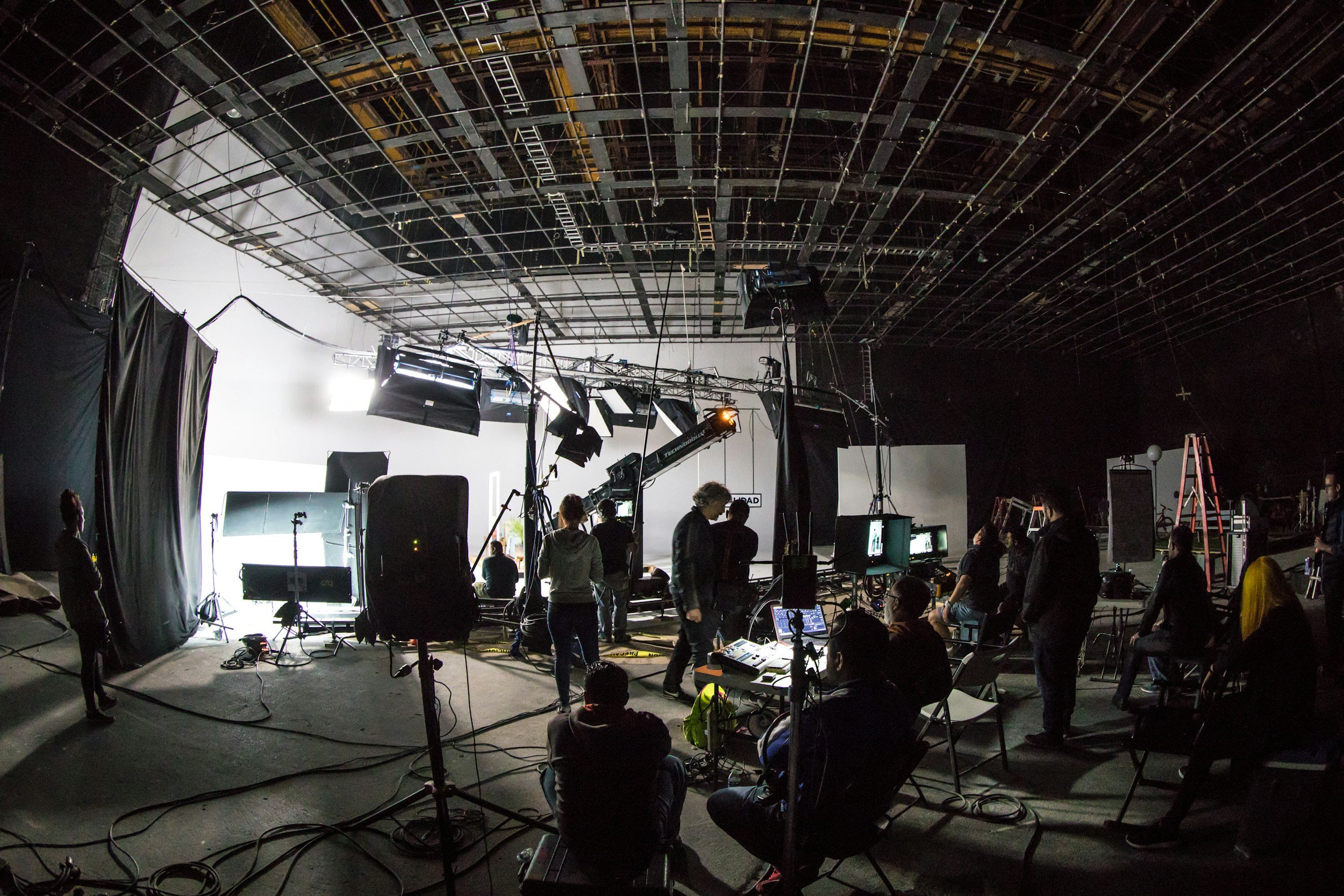
The undisputed standard in television and multimedia production is the three-point lighting setup. This technique creates a three-dimensional illusion on a two-dimensional screen by using three distinct light sources to separate the subject from the background.
The Key Light: This is your primary light source and the brightest light on your set. Positioned at a 45-degree angle to the subject and slightly above their eye line, the key light illuminates the face and establishes the overall exposure.
The Fill Light: Positioned on the opposite side of the camera from the key light, the fill is a softer, less intense light (usually half the intensity of the key). Its job is to "fill in" the harsh shadows created by the key light without eliminating them entirely, preserving the natural contours of the face.
The Backlight (or Hair Light): Placed behind the subject and angled down toward their head and shoulders, the backlight creates a subtle halo effect. This is the secret weapon for professional video—it physically separates the subject from the background, adding immediate depth to the shot.
Understanding Color Temperature
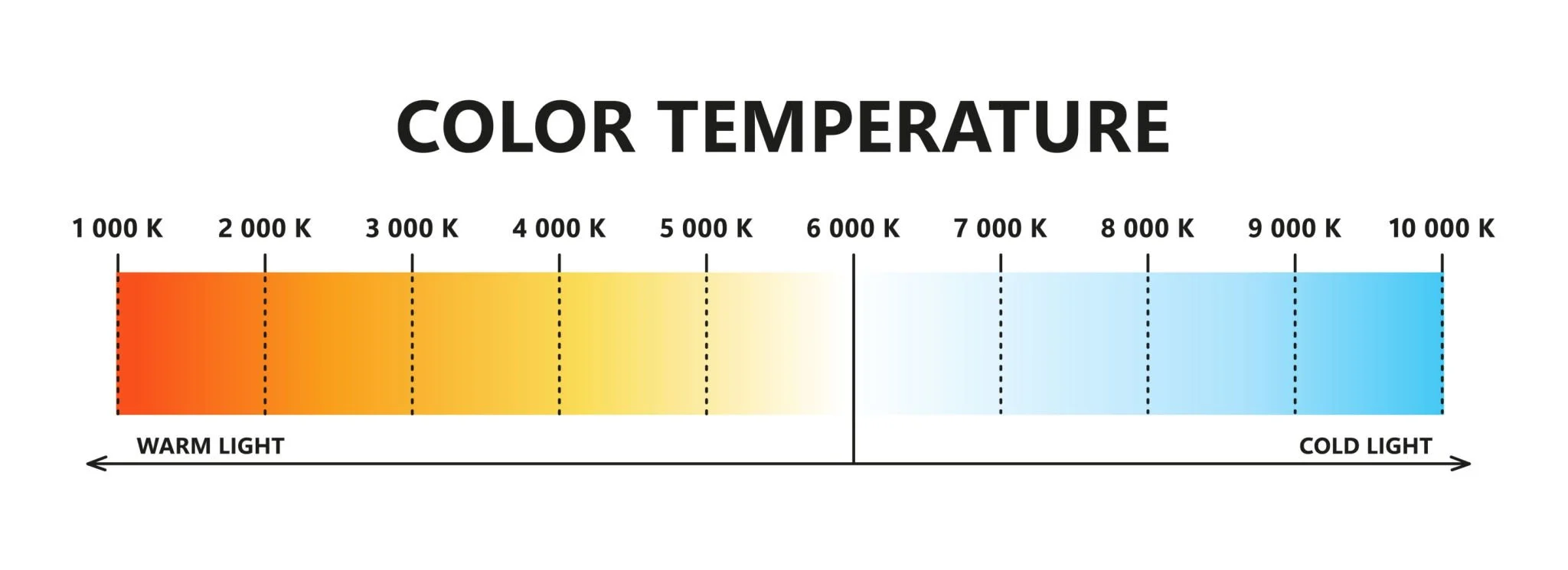
Light isn't just bright or dim; it has a specific color cast, measured in Kelvin (K). If you mix different color temperatures without balancing your camera's white balance, your footage will look unnaturally blue or orange.
In television production, you generally work with two primary baselines:
Tungsten (3200K): This is the traditional color of indoor studio lighting. It produces a warm, orange-yellow cast.
Daylight (5600K): This mimics the color of natural sunlight at noon. It produces a cooler, slightly blue cast.
The Golden Rule: Always decide on your base color temperature before rolling. If you are shooting in a room with large windows letting in natural sunlight (5600K), you should balance your LED studio lights to 5600K to match. Mixing daylight and tungsten indiscriminately creates a muddy, distracting image.
The Quality of Light: Hard vs. Soft
Beyond placement and color, the quality of the light drastically alters the mood of a scene.
Hard Light: Created by small, focused light sources (like a bare bulb or the direct sun). It produces sharp, distinct shadows and high contrast. Hard light is dramatic and edgy but emphasizes skin textures and wrinkles, making it generally unflattering for standard interviews.
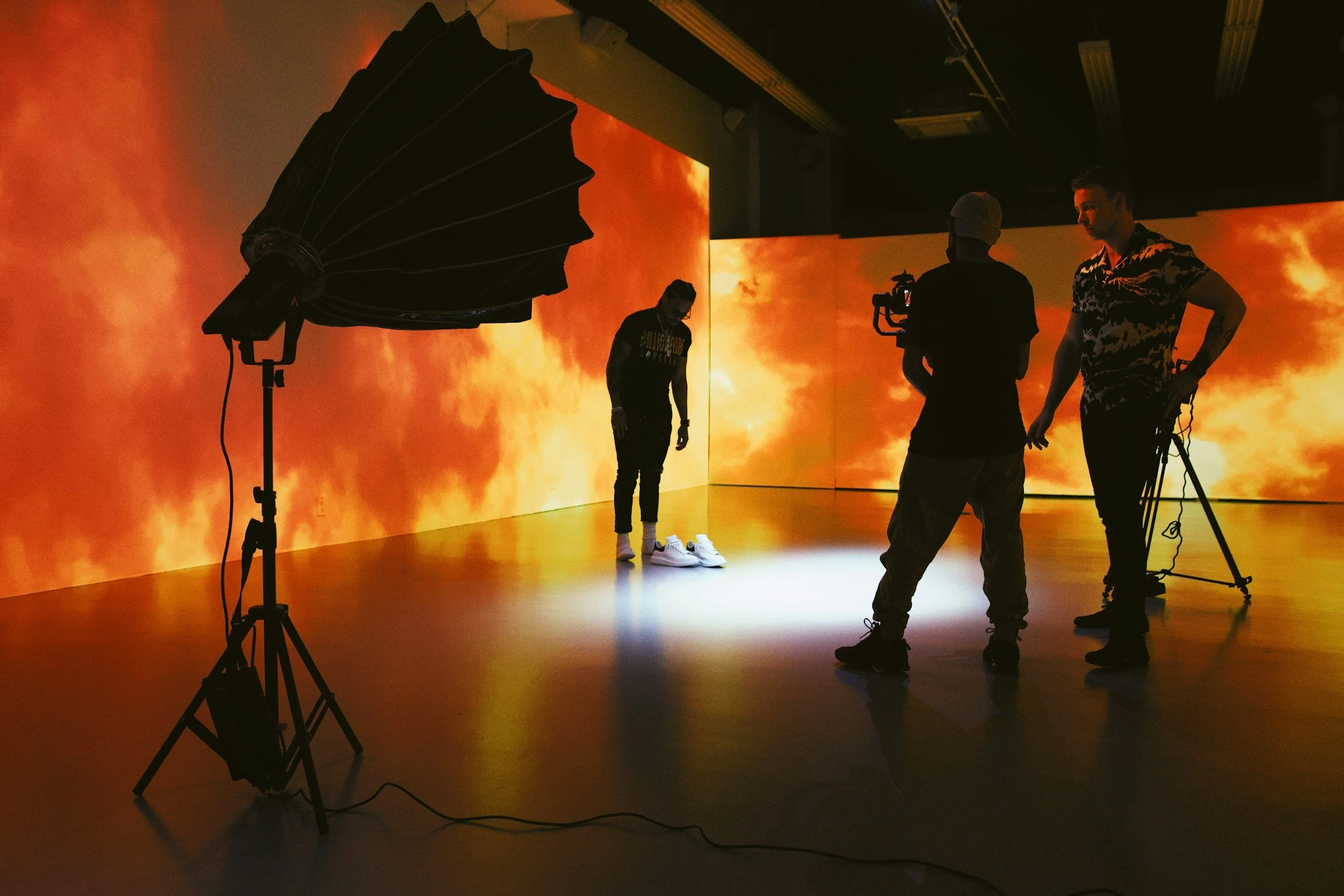
Soft Light: Created by large, diffused sources (like a softbox, a light bounced off a white wall, or an overcast sky). The light wraps around the subject, creating smooth, gradual transitions between highlights and shadows. This is the go-to choice for corporate interviews, commercial shoots, and broadcast news because it is highly flattering to the human face.
To soften a hard light on set, you can expand its surface area by placing diffusion gel or a silk in front of the fixture, or by bouncing the light off a white reflector board.
Final Takeaways for the Set
Turn off overheads: Fluorescent or LED office lights usually cast awful, green-tinted shadows under the eyes. Kill the room lights and build your lighting from scratch.
Control the spill: Use barn doors, flags, or grids to ensure your light hits only what you want it to hit. A stray beam of light hitting a distracting background element can ruin a great composition.
Expose for the Key: Always set your camera's exposure based on the brightest part of your subject's face (lit by the key light) to ensure you don't lose detail in the highlights.